
Last Updated: November 22, 2026
Quick Summary
Motorcycle tires are expensive because they are built in small batches to carry a two-wheeled vehicle through cornering, braking and wet weather, and that specialized design costs far more per unit than a mass-produced car tire. Low production volume, dual-compound rubber and frequent mold changeovers all raise the per-unit cost.
- A dual-compound tire uses two rubber formulations in one tread, adding material handling and scrap.
- Each size and model needs its own mold and cure recipe, and motorcycle lines change over far more often.
- The Michelin Road 6 Front Motorcycle Tire costs $241.99, while the Road 5 Front sits at $206.99.
- Bring in your wheel off the bike to get free mount and balance with purchase.
- Divide your out-the-door cost by expected miles to compare tires by cost per mile.
Table of Contents
- Why Are Motorcycle Tires So Expensive?
- Motorcycle Tires vs Car Tires: Design and Cost Differences
- What Goes Into Motorcycle Tire Cost
- Motorcycle Tire Installation Cost and Lifespan
- Frequently Asked Questions
Why Are Motorcycle Tires So Expensive?
Motorcycle tires are expensive because they are built in small batches to carry a two-wheeled vehicle through cornering, braking and wet weather, and that specialized design costs far more per unit than a mass-produced car tire. Riders often ask why one motorcycle tire costs more than a set of four car tires.
The answer comes down to volume, engineering and labor. A car tire factory might run millions of identical units; a motorcycle tire line runs thousands, and each size, compound and carcass must meet grip and safety demands a car tire never faces.
Motorcycle Tires vs Car Tires: Design and Cost Differences
A motorcycle tire carries a fraction of a car tire's contact patch while handling cornering forces a car splits across four wide footprints, which drives most of the cost gap.
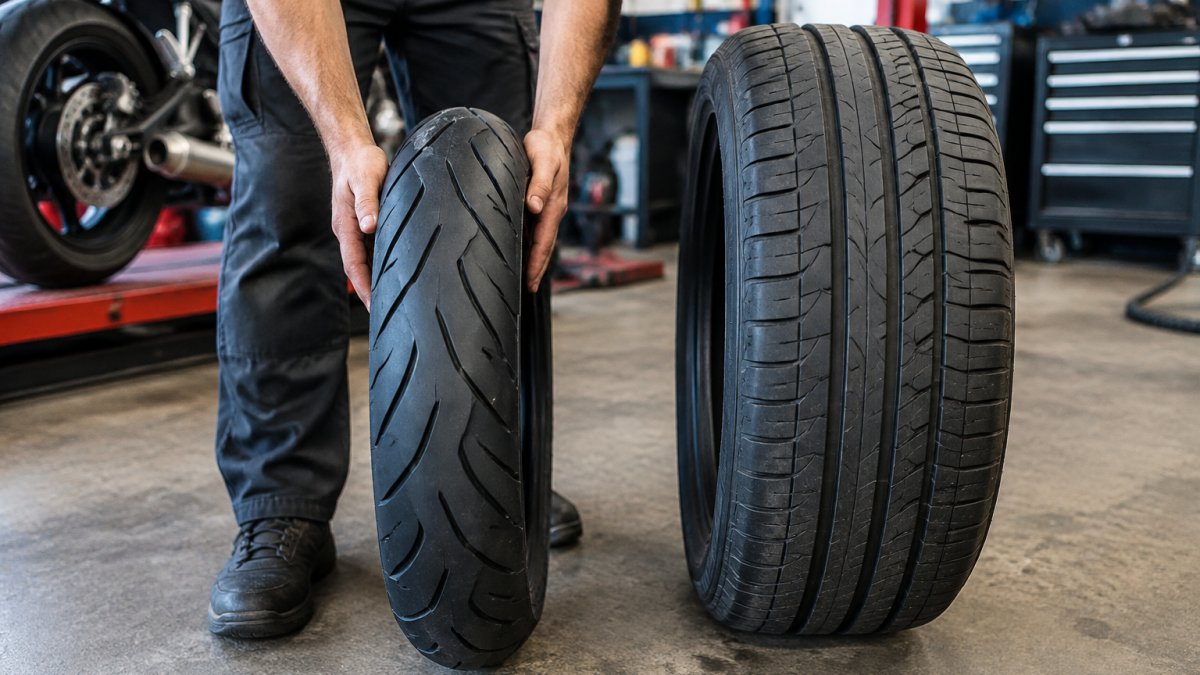
The construction differs in ways that cost money:
- Profile: rounded so the bike can lean; a car tire is nearly flat.
- Carcass: lighter and tuned for flex and feedback.
- Compounds: dual-compound designs put softer rubber on the shoulders for grip and harder rubber in the center for mileage.
- Volume: car tires are made in enormous production runs; motorcycle sizes are low-volume, raising per-unit cost.
If you want to compare real prices for your own bike, you can browse street motorcycle tires and see how size and model affect the number.
What Goes Into Motorcycle Tire Cost
Raw materials are only part of a motorcycle tire's price. The bigger drivers are the fixed costs of developing and tooling a low-volume product, divided across far fewer tires than a car tire program sees.
Here is how the pieces actually stack up:
| Cost Factor | What It Covers | Why It Costs More Per Tire |
|---|---|---|
| Raw materials | Rubber compounds, silica, carbon black, cord, steel bead | A dual-compound tire uses two rubber formulations in one tread, so the shoulder and center can be tuned separately for grip and mileage; that is more material handling and more scrap than a single-compound car tire. |
| Research and development | Compound testing, tread pattern design, carcass profiling, indoor and track validation | A new motorcycle tire has to be validated for lean angle, wet grip, braking stability and high-speed durability, and those test programs are spread over a much smaller unit volume than a car tire line. |
| Tooling and low-volume production | Molds, curing presses, short production runs, frequent changeovers | Each size and model needs its own mold and cure recipe. A car tire plant may run one size for days; a motorcycle line changes over far more often, and the changeover time is baked into unit cost. |
| Shipping and import | Ocean freight, duties, warehousing, distribution | Motorcycle tires ship in smaller batches and often come from a limited number of overseas plants, so freight and handling are spread over fewer units per shipment. |
| Dealer margin | Stocking, storage, service, mount and balance | A dealer has to stock many sizes and compounds to fit the range of bikes on the road, and that inventory carrying cost is part of the retail price. |
For a benchmark, the Michelin Road 6 Front Motorcycle Tire at $241.99 shows what a premium sport-touring front costs, while the Michelin Road 5 Front Motorcycle Tire at $206.99 sits just below it. Both come with free mount and balance when you bring in your wheel off the bike.
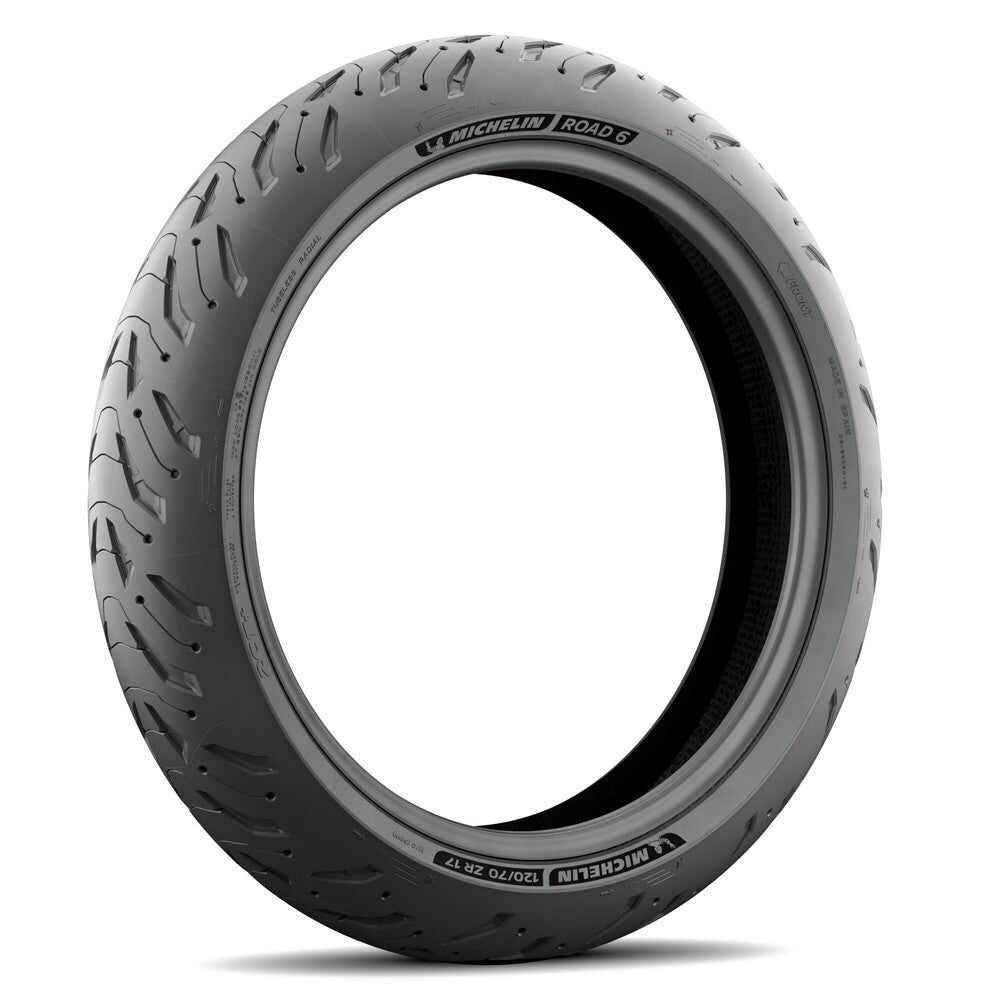
Separate the tire from the service: the $241.99 is the tire itself. Bring in your wheel off the bike to receive free mount and balance. When comparing quotes, ask whether the price includes removal, mounting, balancing, and disposal.
Best for: riders who want long tread life and strong wet grip. Skip if: you only ride occasionally and prioritize the lowest upfront price.
Motorcycle Tire Installation Cost and Lifespan
Installation adds real money to the total, and lifespan determines your true cost per mile.
| Line Item | What It Covers | How It Shows Up on the Bill |
|---|---|---|
| Tire purchase price | The tire itself, before service | The sticker or online price |
| Wheel removal and reinstallation | Labor to take the wheel off the bike and put it back | Often billed per wheel, and higher on bikes with single-sided swingarms, shaft drive, or bodywork that has to come off |
| Mounting | Breaking the bead, seating the new tire on the rim | Usually a fixed labor charge per tire |
| Balancing | Spin balancing or static balancing, plus weights | Sometimes bundled with mounting, sometimes a separate line |
| Disposal | Recycling or disposal of the old tire | A per-tire environmental or disposal fee |
| Valve stem or TPMS service | New valve stem, or resetting a tire-pressure sensor | Small but real add-on on many modern bikes |
Bringing in the wheel off the bike is the way to get free mount and balance with purchase at Santa Clara Cycle.
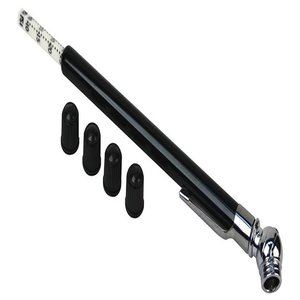
Lifespan decides value. Tire life depends on compound, riding style, load, and tire pressure. Sport-touring tires generally last longer than soft sport compounds. Checking pressure regularly extends tread life and is the cheapest maintenance you can do. A simple gauge like the Slime Motorcycle Tire Gauge 10 50 Psi makes that easy.
To compare value instead of sticker price, use a simple cost-per-mile method:
- Add the tire price and the installed service cost to get your true out-the-door cost.
- Estimate the miles you expect from that tire based on its category and your riding style.
- Divide the out-the-door cost by the expected miles.
A $241.99 premium sport-touring front that delivers long life can cost less per mile than a cheaper tire that wears out sooner, and the same math applies to rears.
If you ride off-road or adventure, explore off road motorcycle tires to see how specialized designs are priced, and remember that aggressive knobby tires often wear faster on pavement, which raises cost per mile even when the sticker looks reasonable.
Watch out: a quote that looks cheaper can cost more per mile if it excludes balancing, disposal, or a new valve stem, so ask for the full installed total before you compare.
Motorcycle tires cost what they do because of low volume, real engineering and skilled labor, and the smartest way to manage that cost is to buy from a shop that mounts them free and stocks the right sizes. Santa Clara Cycle has served riders for over 25 years as a family-owned shop, offering competitive tire pricing, free mounting with purchase, and a wide inventory of parts and gear. Get started with Santa Clara Cycle and put a fresh, properly mounted set of tires under your bike.
Frequently Asked Questions
Why are motorcycle tires so expensive right now?
Three things drive the price: low production volume, specialized rubber compounds and construction, and rising material and import costs. Motorcycle tires are made in far smaller batches than car tires, so each unit carries more of the development and manufacturing cost. Add tariffs on imported rubber and the engineering behind grip and safety, and the per-tire price climbs well above what a car tire costs.
What's the average lifespan of a motorcycle tire?
Most street riders get roughly 8,000 to 12,000 miles from a sport-touring rear tire, depending on riding style, load, and road conditions. Front tires often last a bit longer. Softer sport compounds wear faster, sometimes under 5,000 miles. Because motorcycle tires wear quicker than car tires, the cost per mile is higher, which is why lifespan matters as much as the sticker price when you compare motorcycle tire cost.
Are more expensive motorcycle tires worth it?
Often, yes. Premium tires like the Michelin Road 6 use silica-rich compounds and 3D siping that deliver up to 15% better wet grip and about 10% longer tread life than the previous generation. That extra grip and mileage can offset the higher price over the life of the tire. Budget tires cost less up front but may wear faster and offer less confidence in rain, so weigh cost per mile, not just the purchase price.
